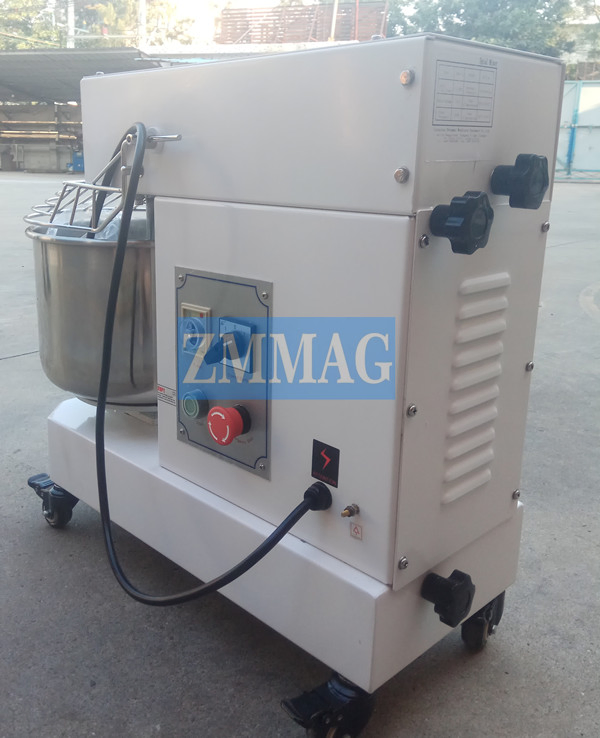
Mixing Equipment
Precision Engineered Mixing Equipment for Demanding Industrial Applications
At processing-machinery.com, we design and manufacture industrial mixing equipment that sets the standard for reliability, efficiency, and precision. Our mixers are engineered to handle a vast array of materials, from low-viscosity liquids to highly viscous pastes and powders, ensuring homogeneous blending, dispersion, and reaction across industries such as chemicals, pharmaceuticals, food & beverage, cosmetics, and construction materials. With over two decades of engineering excellence, our solutions are built to optimize your production process, reduce operational costs, and deliver consistent, high-quality batch after batch.
Core Product Technologies and Design Principles
Our mixing equipment utilizes advanced mechanical designs and drive technologies to achieve superior mixing performance. Key engineering principles include:
- Variable Frequency Drive (VFD) Systems: For precise control over agitation speed, torque, and power consumption, allowing for process optimization and gentle handling of shear-sensitive products.
- Computational Fluid Dynamics (CFD) Optimized Impellers: Impeller and blade profiles are designed using CFD simulation to ensure optimal flow patterns, minimize dead zones, and achieve targeted shear rates.
- Robust Sealing Solutions: Options include single mechanical seals, double mechanical seals, and gland packing, selected based on pressure, temperature, and the necessity for sterile or contaminant-free processing.
- Sanitary and Aseptic Designs: Featuring polished surfaces, crevice-free connections, and CIP/SIP capabilities for industries with stringent hygiene standards.
- Modular Construction: Allows for customization with various nozzles, manways, heating/cooling jackets, and instrumentation ports to fit specific process requirements.
Detailed Product Parameters and Specifications
Selecting the right mixer depends on a precise understanding of your process parameters. Below are the critical specifications for our standard and custom Mixing Equipment lines.
Standard Series Technical Specifications
| Model Series | Capacity Range | Power Range | Mixing Speed Range | Construction Material | Primary Application |
|---|---|---|---|---|---|
| PM-MX-TopDrive | 50 L - 5,000 L | 1.5 kW - 75 kW | 20 - 300 RPM | 304/316L SS, Carbon Steel | High-viscosity blending, polymerization |
| PM-MX-SideEntry | 500 L - 20,000 L | 5.5 kW - 160 kW | 15 - 180 RPM | 316L SS, Lined | Large tank blending, slurry suspension |
| PM-MX-Sanitary | 100 L - 2,000 L | 0.75 kW - 37 kW | 10 - 500 RPM | 316L SS, Electro-polished | Pharmaceuticals, Dairy, Cosmetics |
| PM-MX-HighShear | 10 L - 1,000 L | 2.2 kW - 55 kW | 500 - 10,000 RPM (Rotor/Stator) | 304/316L SS, Hastelloy | Emulsification, particle size reduction |
| PM-MX-Plow | 50 L - 10,000 L | 4 kW - 132 kW | 40 - 150 RPM | Carbon Steel, SS, Coated | Powder-Powder, Powder-Liquid mixing |
Critical Performance & Installation Parameters
Beyond the model series, these detailed parameters ensure the mixer is perfectly matched to your system.
- Viscosity Handling: Capable of processing materials from 1 cP (water-like) to over 2,000,000 cP (dough-like pastes).
- Pressure Rating: Vessel designs from full vacuum to 10 bar, depending on model and customization.
- Temperature Range: Standard operation from -20°C to +300°C, with specialized jackets and insulation for extreme processes.
- Motor Efficiency: IE3 or IE4 premium efficiency motors as standard, reducing long-term energy costs.
- Agitator Types: Wide selection available: Turbine, Anchor, Helical, Retreat Curve, Disc, and proprietary high-shear rotor/stator generators.
- Surface Finish: Standard Ra ≤ 0.8 µm. Sanitary finishes Ra ≤ 0.4 µm (Mirror Polish) available.
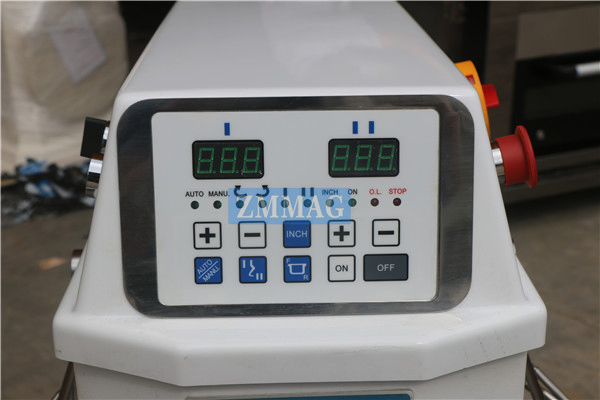
- Control Integration: Compatible with PLC, SCADA, and DCS systems. Options for local HMI panels with recipe management and data logging.
Mixing Equipment FAQ: Expert Answers from processing-machinery.com
Q: What is the most important factor in selecting a mixer for a new process?
A: The most critical factor is understanding your process's rheology—how the viscosity and flow behavior of your material changes under shear and temperature. A fluid with thinning behavior requires a different impeller design than a shear-thickening one. Providing a detailed sample for testing at our processing-machinery.com lab is the best way to determine the optimal agitator type, speed, and power requirements for homogeneity.
Q: How do I choose between a top-entry and a side-entry mixer?
A: Top-entry mixers are the most common, suitable for closed or open tanks where the agitator is mounted centrally from the top. They provide symmetrical flow and are ideal for most blending and reaction tasks. Side-entry mixers are installed at an angle on the side of very large storage or blending tanks (often > 10,000 gallons) where a single, large top-mounted unit is impractical. They are used for continuous blending to prevent settling or stratification in low-energy mixing applications.
Q: What are the key maintenance requirements for industrial mixing equipment?
A: Regular maintenance is vital for longevity. Key checks include: 1) Seal Inspection: Monitor for leaks and lubricant levels in seal chambers. 2) Bearing Lubrication: Follow manufacturer schedules for greasing motor and gearbox bearings. 3) Impeller Integrity: Periodically check for wear, corrosion, or damage that can imbalance the shaft. 4) Vibration Analysis: Implement routine vibration monitoring to detect misalignment or bearing wear early. 5) Gearbox Oil: Check oil level and clarity regularly, changing as recommended. Our equipment from processing-machinery.com includes detailed maintenance manuals and remote diagnostic support options.
Q: Can your mixers be integrated into an existing fully automated production line?
A: Yes, absolutely. Our mixing equipment is designed for seamless Industry 4.0 integration. We provide standardized communication protocols (e.g., Profibus, Profinet, Ethernet/IP, Modbus TCP) and can supply motors with integrated variable frequency drives ready for network commands. All critical parameters—speed, torque, temperature, power draw—can be fed back to your central PLC or SCADA system for real-time monitoring, predictive maintenance alerts, and automated batch recipe control.
Q: What is the lead time for a custom-configured mixer?
A: Lead times vary based on complexity. For standard models with minor modifications (e.g., extra nozzles, specific motor voltage), expect 8-12 weeks. For fully customized systems involving special materials (e.g., duplex steels, nickel alloys), unique agitator designs, or complex heating/cooling systems, the engineering and fabrication process typically takes 14-22 weeks. We provide a detailed project timeline upon receipt of your technical data sheet at processing-machinery.com.
Q: How does a high-shear mixer differ from a standard agitator?
A: A standard agitator (like an anchor or turbine) primarily creates bulk flow for blending. A high-shear mixer is designed to impart intense mechanical energy into the product through a precision-machined rotor spinning at high speed within a close-clearance stator. This creates extreme shear forces, cavitation, and turbulence, which are necessary for tasks like breaking down agglomerates, reducing particle size, creating stable emulsions, and accelerating chemical reactions. They are often used in-line or as part of a batch recirculation loop.
Q: What safety features are included as standard?
A: Safety is paramount. Our standard features include: motor overload protection, emergency stop buttons on local control panels, mechanical shaft seals designed to contain process media, guards on all rotating parts, and pressure relief devices on sealed vessels. We also offer ATEX or IECEx certified equipment for explosive atmospheres, interlocked covers that cut power when opened, and torque monitoring systems to detect shaft seizure and prevent motor damage.
Advanced Features and Customization Options
To tackle specific process challenges, processing-machinery.com offers a range of advanced features:
- Heating/Cooling Jackets: Dimple, half-pipe, or conventional jackets for precise temperature control.
- Bottom Discharge Valves: Manual, pneumatic, or hydraulic actuated flush-bottom valves for complete discharge.
- In-line Sampling Systems: Sanitary, aseptic sampling valves for quality control without batch contamination.
- Load Cells & Weighing Systems: Integrated for accurate ingredient addition and batch weight control.
- Explosion-Proof Design: Full certification for use in areas with combustible dust or gases.
- Redundant Seal Systems: Double mechanical seals with barrier fluid monitoring for absolute containment of toxic or expensive media.
- View as