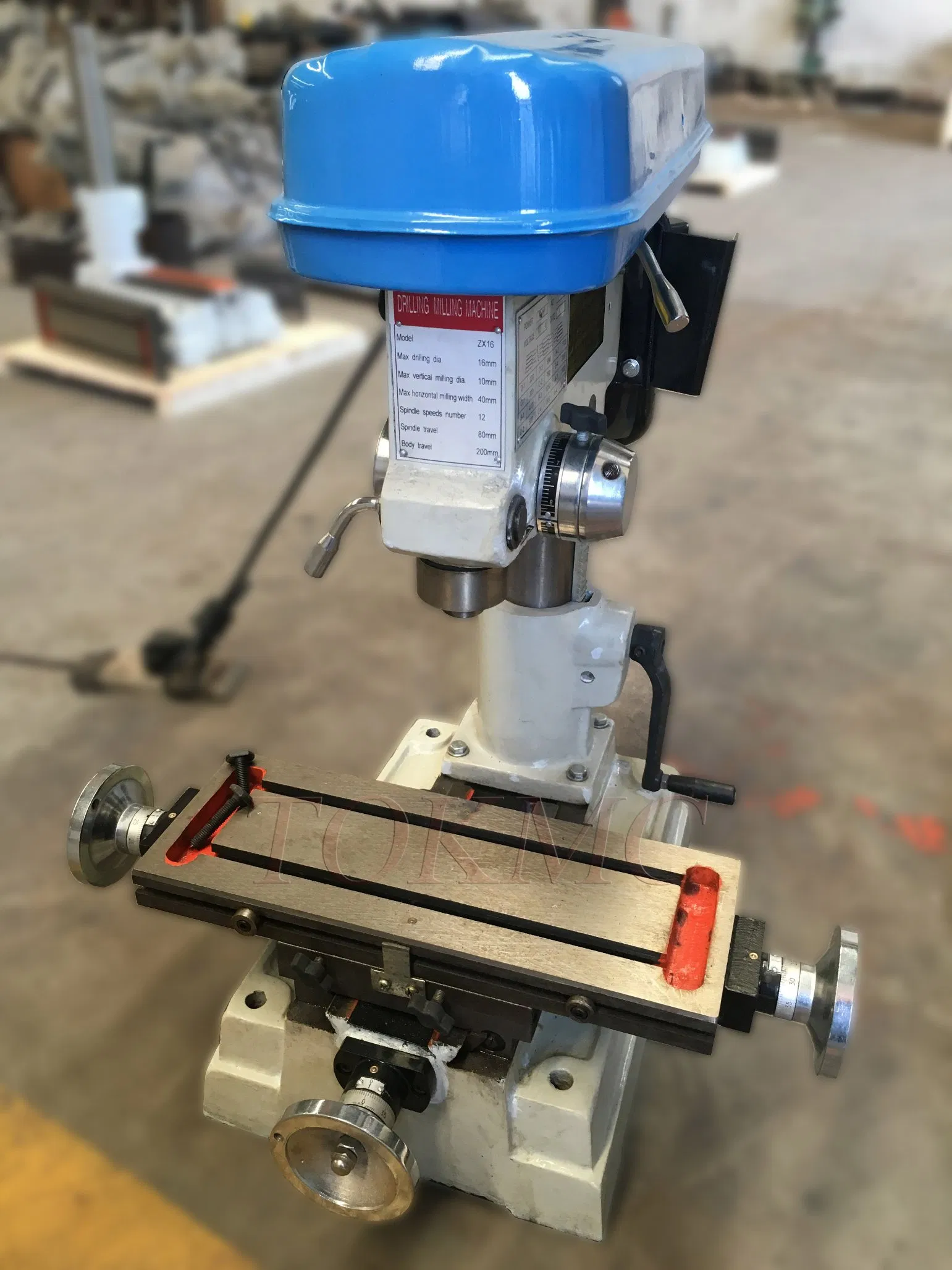
Milling Machine
Precision Engineered for Performance: The Ultimate Milling Machine Solution
In the demanding world of modern fabrication and manufacturing, the choice of a milling machine is pivotal. It's the cornerstone of precision, efficiency, and productivity. At processing-machinery.com, we engineer and supply industrial-grade milling machines designed to meet the rigorous challenges of today's workshops, from intricate prototyping to high-volume production runs. Our commitment is to provide robust, accurate, and versatile equipment that becomes a long-term asset for your business.
Core Features of Our Advanced Milling Machinery
Every milling machine from processing-machinery.com is built with a focus on durability, precision, and user-centric operation. We integrate advanced technologies to ensure superior performance across various materials, including metals, plastics, and composites.
- Rigid Construction: Heavy-duty cast iron or welded steel frame minimizes vibration, ensuring exceptional surface finishes and prolonged tool life.
- High-Precision Spindle: Equipped with precision-ground spindles supported by high-grade bearings for minimal runout and optimal cutting accuracy.
- Advanced CNC Control Systems: User-friendly interfaces (compatible with industry-standard G-code) paired with powerful servo motors for complex contouring and repeatable operations.
- Versatile Axis Movement: Available in 3-axis, 4-axis, and 5-axis configurations to handle everything from simple face milling to complex multi-sided machining in a single setup.
- Automatic Tool Changer (ATC): Optional ATC systems dramatically reduce non-cutting time, enhancing productivity for jobs requiring multiple tools.
- Comprehensive Cooling & Chip Management: Integrated coolant systems and efficient chip conveyors maintain optimal cutting conditions and improve workplace safety.
Technical Specifications: Detailed Comparison
Selecting the right milling machine requires a clear understanding of its capabilities. Below is a detailed table outlining the key specifications of our standard series. For custom configurations, our engineering team at processing-machinery.com is ready to assist.
| Model Series | Work Table Size (L x W) | X/Y/Z Travel | Spindle Power | Spindle Speed Range | CNC Control | Positioning Accuracy |
|---|---|---|---|---|---|---|
| PM-VF500 (Vertical) | 44" x 12" | 30" x 16" x 20" | 7.5 HP (Continuous) | 50 - 8,000 rpm | PM-Control 2000 / Siemens 828D | ±0.0002" |
| PM-HM800 (Horizontal) | 49" x 20" | 40" x 24" x 24" | 15 HP (Continuous) | 40 - 6,000 rpm | Siemens 840D sl | ±0.00015" |
| PM-5X200 (5-Axis) | 31.5" x 19.7" | 24" x 20" x 18" (+ A/C Axes) | 12,000 rpm (ISO 40) | 100 - 12,000 rpm | Heidenhain TNC 640 | ±8 arcsec (Rotary) |
| PM-BM650 (Bed Mill) | 55" x 15" | 40" x 18" x 24" | 10 HP (Continuous) | 60 - 4,500 rpm | Fanuc 0i-MF | ±0.0003" |
Frequently Asked Questions (FAQs) About Milling Machines
We at processing-machinery.com understand that investing in a milling machine brings important questions. Here are detailed answers to some of the most common queries we receive.
What is the main difference between a vertical and a horizontal milling machine?
The primary difference lies in the orientation of the spindle. A vertical milling machine has a vertically oriented spindle, much like a drill press, making it ideal for plunge cuts, drilling, and die-sinking. A horizontal milling machine has a horizontally oriented spindle, allowing for the use of arbor-mounted cutters. This design is often better for heavy stock removal, gang milling, and slotting operations, as chips fall away more easily, and the setup can be more rigid for certain cuts.
How do I determine the correct spindle power and speed for my application?
Spindle power (HP/kW) dictates the machine's ability to remove material, especially in harder metals like steel or titanium. For heavy-duty cutting, higher continuous power is essential. Spindle speed (RPM) affects surface finish and the ability to effectively machine different materials. High RPMs are needed for small tools and non-ferrous metals like aluminum, while lower RPMs with high torque are better for large-diameter tools and tough materials. Our experts at processing-machinery.com can analyze your typical workpiece materials and part geometry to recommend the optimal balance.
What does "positioning accuracy" and "repeatability" mean for a milling machine?
Positioning accuracy refers to how closely the machine can move its table or spindle to a commanded position within the coordinate system. A value of ±0.0002" means the actual position will be within 0.0002 inches of the programmed point. Repeatability is the machine's ability to return to that same position consistently over multiple attempts. High repeatability is crucial for batch production where every part must be identical. Both are critical metrics for precision machining.
Is a CNC milling machine difficult to learn and operate?
Modern CNC controls are designed with operator usability in mind. While there is a learning curve associated with programming and setup, many systems feature conversational programming, graphical toolpath simulation, and intuitive interfaces that reduce the barrier to entry. processing-machinery.com provides comprehensive training and detailed documentation with every machine. For simpler tasks, manual milling machines remain an excellent and straightforward option.
What maintenance does an industrial milling machine require?
Regular preventative maintenance is key to longevity and accuracy. Daily tasks include cleaning chips and checking fluid levels. Weekly and monthly routines involve lubricating guideways and ball screws, checking for backlash, and verifying alignment. Annual maintenance by a qualified technician should include a full inspection of the spindle, servo systems, and control electronics. Following the structured maintenance schedule provided in the machine manual from processing-machinery.com is essential for optimal performance.
Can I upgrade a manual milling machine to CNC later?
Yes, retrofitting a manual mill with a CNC kit is possible and can be a cost-effective way to add automation. However, it involves adding servo motors, ball screws, encoders, and a control system. The success depends heavily on the base machine's rigidity and condition. It's important to note that a purpose-built CNC milling machine from processing-machinery.com is engineered from the ground up for CNC operations, offering superior rigidity, integrated safety features, and optimized performance that a retrofit may not fully achieve.
What safety features are standard on your milling machines?
Operator safety is paramount. Our standard safety package includes emergency stop buttons at multiple locations, spindle and axis overload protection, door interlock systems on enclosed models, and chip guarding. Many CNC models feature software-based limits, collision avoidance, and tool breakage detection. We adhere to and exceed relevant international safety standards (e.g., CE, ANSI) in all our designs at processing-machinery.com.
- View as