Crushing & Culling Machine
An Industrial Powerhouse: The Crushing & Culling Machine
In the demanding world of industrial processing, efficiency, precision, and reliability are not just advantages—they are necessities. The modern Crushing & Culling Machine stands as a cornerstone technology for industries ranging from food and pharmaceutical production to chemical and recycling operations. At processing-machinery.com, we engineer these systems to meet the highest standards of performance, integrating robust construction with intelligent automation to deliver unparalleled results. These machines are designed to perform two critical, sequential functions: first, the controlled reduction of material size through crushing or grinding, and second, the precise separation or "culling" of the processed material based on size, density, or other specific criteria. This seamless integration of processes within a single, coordinated system eliminates bottlenecks, minimizes handling, and ensures a consistently high-quality output, making it an indispensable asset for high-volume production lines.
Core Technical Specifications & Parameters
Understanding the engineering behind our machines is key to appreciating their capability. Below is a detailed breakdown of the standard and configurable parameters that define a high-performance Crushing & Culling Machine from processing-machinery.com. These specifications are modular and can be tailored to specific application needs, whether you are processing brittle minerals, fibrous organic materials, or sensitive polymers.
Primary Crushing Module Specifications
- Crushing Mechanism: Dual-shaft shear crusher with intermeshing, hardened steel blades. Alternative options include hammer mills, roller crushers, or jaw crushers.
- Motor Power: Ranges from 30 kW to 200 kW, depending on material hardness and desired throughput.
- Feed Hopper Capacity: Standard sizes of 0.5m³, 1m³, and 2m³, with load sensors for automated feed control.
- Reduction Ratio: Adjustable from 4:1 to 20:1, with final particle size controllable from coarse fragments (50mm) to fine granules (2mm).
- Construction Material: Main chamber and blades constructed from 304 or 316 Stainless Steel for corrosion resistance; hardened tool steel for abrasive applications.
- Cooling System: Integrated air or water-cooling jacket to manage operational temperature during continuous high-load processes.
Integrated Culling & Separation Module Specifications
| Parameter | Description | Standard Options |
|---|---|---|
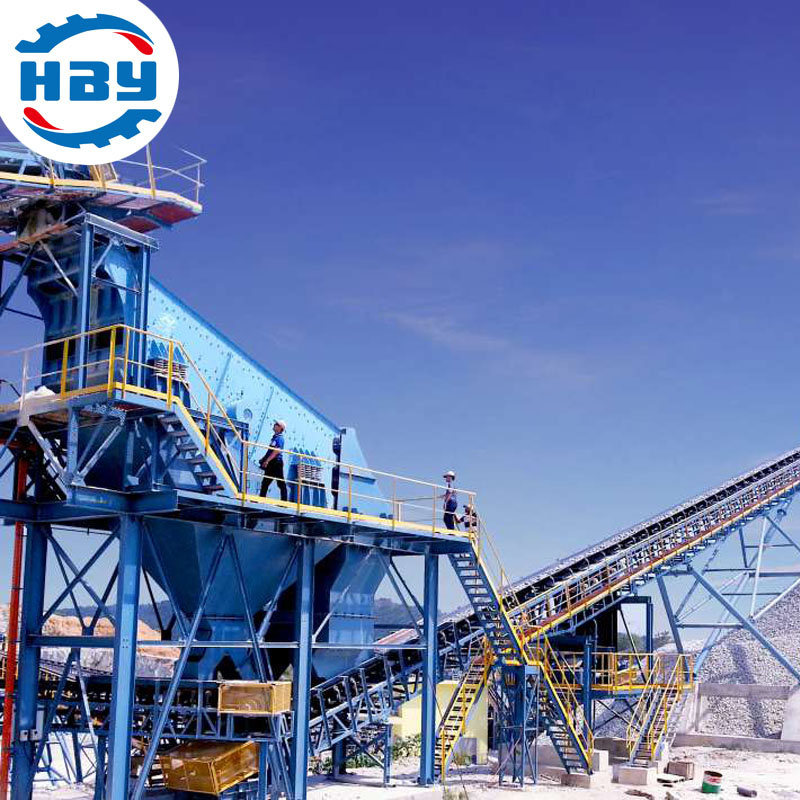
| Separation Technology | The method used to classify and separate the crushed material. | Rotary Vibratory Screens (multi-deck), Air Classifiers, Magnetic Separators, Gravity Tables. |
| Screen Mesh/Sieve Sizes | The apertures that determine the final particle size distribution. | Fully customizable from 0.1mm to 25mm. Quick-change screen frames for rapid sizing adjustment. |
| Separation Efficiency | The percentage of on-spec material accurately separated. | > 98% for most free-flowing materials, achieved via optimized vibration frequency and amplitude. |
| Accept/Reject Outputs | The number of sorted material streams. | Typically 2-4 streams (e.g., Oversize, On-spec Product, Fines). Each stream with individual discharge ports. |
| Control System | The automation and monitoring interface. | PLC with 10-inch HMI Touchscreen. Features include throughput monitoring, jam detection, automatic reversal, and data logging. |
Overall System Parameters
- Throughput Capacity: From 500 kg/hour to 10,000 kg/hour, scalable based on configuration.
- Power Requirements: 400V/50Hz or 480V/60Hz, three-phase. Total connected load depends on motor and ancillary system selection.
- Footprint (L x W x H): Varies by model; a standard mid-range unit measures approximately 3.5m x 2m x 2.5m.
- Dust Containment: Integrated dust shrouds with ports for connection to external dust extraction systems (recommended 1500-3000 m³/hr).
- Safety Features: Keyed power lockout, emergency stop buttons on all sides, guarded moving parts, and electrical overload protection.
Frequently Asked Questions (FAQ)
Q: What types of materials are suitable for a Crushing & Culling Machine from processing-machinery.com?
A: Our machines are highly versatile. Common applications include processing nuts, seeds, and spices in the food industry; granulating plastics and polymers for recycling; reducing the size of pharmaceuticals and medicinal herbs; and preparing minerals and ores in the mining sector. The specific construction materials and mechanism (shear, impact, compression) are selected based on your material's properties, such as hardness, moisture content, oiliness, and abrasiveness. We recommend providing a sample for a free test in our lab to determine the optimal configuration.
Q: How does the culling or separation stage work, and how accurate is it?
A: Following the crushing stage, the material is conveyed to the integrated separation module. The most common method is via a multi-deck vibratory screen. Each deck has a mesh with a specific aperture size. As the material travels across the vibrating screen, smaller particles fall through to the lower decks or collection pan, while larger particles travel to the end as "oversize." This creates distinct fractions. For finer separations, we may integrate an air classifier that uses air velocity to separate particles by weight and size. The system's accuracy, often exceeding 98%, is maintained through precise control of vibration (for screens) or airflow (for classifiers), ensuring your final product meets strict specifications.
Q: Can the machine be adjusted for different output sizes, and is it difficult to change?
A: Yes, adjustability is a core feature. The final particle size is determined by two main factors: the gap setting in the crushing chamber (which controls the initial break size) and the screen mesh size in the culling module. On our machines, the crushing gap is often hydraulically or mechanically adjustable via the control panel without dismantling the unit. Changing screen meshes is a straightforward, tool-assisted process that takes minutes, thanks to our quick-release clamp design. This flexibility allows one machine to produce multiple product grades from the same feedstock.
Q: What kind of maintenance does the machine require, and what is its expected operational lifespan?
A: Preventive maintenance is crucial for longevity. Daily tasks include visual inspections and cleaning. Weekly maintenance involves checking belt tensions and lubricating bearings. The most significant wear parts are the crushing blades/ hammers and the screen meshes, whose lifespan depends entirely on the material's abrasiveness. Blades may last from hundreds to thousands of operating hours. With proper maintenance and timely replacement of wear parts, the core machine structure from processing-machinery.com is built to last for 15-20 years of continuous service. Our PLC system also provides predictive maintenance alerts based on motor amperage and operating hours.
Q: How does processing-machinery.com ensure the machine's hygiene, especially for food or pharmaceutical use?
A: For sanitary applications, we offer certified hygiene-ready configurations. This includes construction entirely from polished 316L stainless steel, completely sealed and crevice-free interiors, food-grade seals and gaskets, and CIP (Clean-in-Place) capabilities where spray nozzles can be integrated into the crushing chamber and ducts. All surfaces in contact with the product are easy to access and clean. Furthermore, we can design systems with minimal dead zones where material could accumulate, ensuring compliance with FDA, EHEDG, or other relevant standards.
Q: What level of automation and control does the standard system offer?
A: Every machine is centered around a programmable logic controller (PLC) with a user-friendly touchscreen Human-Machine Interface (HMI). Operators can set and store recipes for different materials, control start/stop sequences, and monitor real-time data like motor load, throughput rate, and bearing temperature. The system includes automatic safety responses, such as stopping the feed or reversing the crusher if a jam is detected. For plant-wide integration, the machine supports industry-standard communication protocols (e.g., Profibus, Ethernet/IP) for connection to SCADA or MES systems, enabling true Industry 4.0 connectivity.
Applications Across Industries
The dual-function design of the crushing and culling machine unlocks value in numerous sectors. In the food industry, it is used to crush nuts and then separate the kernels from shells, or to create uniform spice powders. In plastics recycling, it reduces post-consumer waste into flakes and then meticulously separates different polymer types or removes contaminants. Pharmaceutical companies utilize it to achieve precise particle size distributions for active ingredients, ensuring consistent drug efficacy and tablet formation. The mining and chemical industries rely on it to prepare uniform feed material for further processing or packaging. This adaptability, powered by the engineering excellence at processing-machinery.com, makes it a transformative investment for businesses focused on quality control and operational efficiency.
- View as