Mesoporous Silica Manufacturer: Pioneering High-Performance Nanomaterials for Tomorrow’s Innovations
2026-06-04
Imagine a material so precisely engineered that its tiny pores unlock breakthroughs in drug delivery, catalysis, and green energy. That’s the promise of mesoporous silica—a high-performance nanomaterial reshaping tomorrow’s innovations. At the forefront of this field is Zhonglian, a manufacturer combining cutting-edge synthesis with scalable production to turn lab-scale potentials into industrial realities. In this post, we explore how mesoporous silica is driving next-generation solutions and why Zhonglian’s approach is capturing the attention of researchers and businesses alike.
Custom-Engineered Porosity: Tailoring Silica Architectures for Precision Applications
Silica materials with precisely controlled pore networks unlock performance in fields where subtle structural details dictate function. Rather than relying on generic formulations, engineers now manipulate pore size, connectivity, and spatial distribution at the synthesis stage. This approach yields architectures where every void serves a purpose—whether to accommodate a specific molecular cargo, guide fluid flow, or modulate mechanical strain. The shift from bulk composition to architectural design represents a fundamental rethinking of how porous solids are conceived.
The arsenal for crafting these customized silica frameworks includes sol-gel templating, surfactant-directed assembly, and solvothermal modification. By adjusting reaction kinetics, template geometry, or post-synthetic etching, one can generate hierarchical porosity spanning micro-, meso-, and macroscales within a single monolith. A catalyst support, for instance, might require interconnected mesopores for rapid mass transport alongside micropores that enhance active-site dispersion. Equally, a drug-delivery matrix benefits from a bimodal pore system where larger cavities store therapeutic payloads while narrower channels regulate release rates. These interlocking pore populations are not accidental; they are the result of deliberate architectural planning.
Precision applications demand rigorous characterization and feedback-driven optimization. Advanced physisorption analysis, electron tomography, and small-angle scattering reveal the three-dimensional pore landscape, enabling iterative refinement of synthesis protocols. The goal is not merely to replicate a desired structure, but to understand how subtle variations—a shift in template concentration, a change in calcination ramp—ripple through the final architecture. In separation membranes, tailored tortuosity and surface chemistry allow selective transport of ions or molecules, outpacing conventional materials. As industrial needs become more exacting, the ability to engineer porosity with such fidelity moves from a laboratory curiosity to a practical necessity, redefining what silica-based systems can achieve.
From Lab Bench to Market: Accelerating Nanomaterial Commercialization
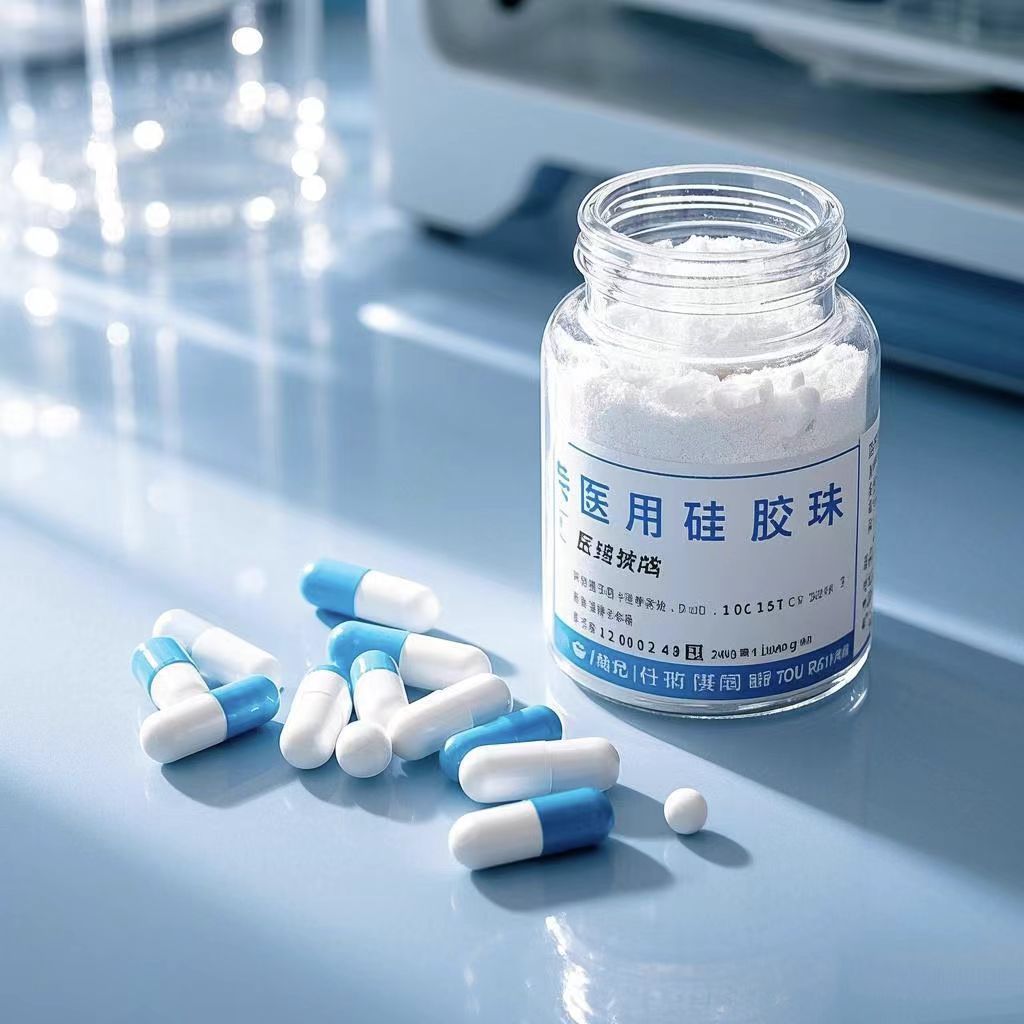
Bringing a nanomaterial from a research breakthrough to a commercial product is rarely a linear path. The initial excitement of a lab-scale discovery often collides with the sobering realities of scale-up: properties that were finely tuned in a beaker can shift unpredictably when production volumes increase, and impurities that were negligible at the milligram level may dominate at the kilogram scale. Many promising materials fail not because the science is unsound, but because the manufacturing processes cannot yet deliver the same performance, batch after batch, at a cost the market will bear.
One of the most effective accelerants is early, honest dialogue between researchers and manufacturers. When companies that will eventually produce or integrate the material are involved at the benchtop stage, they bring a practical filter: they ask about supply-chain stability, equipment compatibility, and regulatory constraints long before those issues become roadblocks. Academic labs that cultivate these relationships often find their materials crossing the so-called “valley of death” faster, because the translational work—process optimization, safety data generation, application testing—happens in parallel with fundamental discovery, rather than being bolted on afterward.
Shared pilot facilities and public-private consortia are also playing a quiet but pivotal role. Instead of every startup or university group building its own expensive scale-up infrastructure, these hubs offer access to high-shear mixers, spray dryers, and characterization suites, staffed by engineers who have years of experience with nanomaterial processing. By lowering the capital barrier and embedding industry-informed quality practices from the start, they compress the timeline from patent to product. The most successful examples are purposefully industry-adjacent, tying funding milestones to tangible commercialization metrics—like demonstrating a 100-kilogram run with less than 5% batch-to-batch variation—rather than just publication counts.
Tomorrow’s Catalysts, Today: Boosting Reaction Efficiency with Mesoporous Silica
The landscape of catalysis is undergoing a quiet revolution, driven by materials that offer precision at the nanoscale. Mesoporous silica has emerged as a standout candidate, not merely as a passive support but as an active contributor to reaction efficiency. Its highly ordered pore networks, tunable between 2 and 50 nanometers, create confined spaces where reactants meet with unprecedented control. Unlike traditional bulk catalysts, these architectures minimize diffusion limitations and maximize the exposure of active sites. The result is a dramatic enhancement in turnover rates, allowing chemical transformations that once demanded extreme conditions to proceed smoothly at ambient temperatures and pressures.
What sets mesoporous silica apart is the synergy between its structural integrity and chemical versatility. The silanol-rich surfaces can be functionalized with a diverse array of catalytic species—from metal nanoparticles to organometallic complexes—without compromising the pore architecture. This marriage of stability and tailorability means that a single scaffold can be optimized for reactions ranging from selective oxidations to complex coupling reactions. The pores act as nanoreactors, shielding sensitive intermediates while facilitating substrate channeling, effectively mimicking the elegance of enzymatic systems. In industrial settings, this translates to higher yields, fewer byproducts, and extended catalyst lifetimes, addressing both economic and environmental pressures.
Looking ahead, the integration of mesoporous silica into flow chemistry and continuous manufacturing is poised to reshape how we approach scale-up. The inherent thermal and mechanical resilience of these materials allows them to withstand the rigors of continuous operation, while their uniform porosity ensures consistent performance batch after batch. Innovations in synthesis are also opening doors to hierarchically structured systems, where multiple pore sizes cooperate to handle complex feedstocks. As the chemical industry pivots toward sustainability, these advanced catalysts offer a tangible path to reducing energy consumption and waste generation. The materials that will power tomorrow's catalytic processes are already here, quietly redefining what efficiency means.
Green Chemistry at the Core: Sustainable Manufacturing without Compromise
In an era where environmental responsibility shapes industry direction, the principles of green chemistry have moved from peripheral consideration to central strategy. Our manufacturing philosophy doesn’t treat sustainability as a checklist item but weaves it directly into the molecular design of our products. By selecting benign solvents, designing energy-efficient synthetic routes, and maximizing atom economy, we ensure that every molecule produced serves its purpose without leaving a trail of toxic by-products or unnecessary waste. This approach allows us to meet rigorous performance standards while dramatically reducing the ecological footprint—proving that high-performance materials and planetary health are not opposing goals but mutual enablers.
The commitment extends beyond our own reactors to the full lifecycle of what we make. We scrutinize raw material origins, preferring renewable feedstocks where possible, and engineer end-products for safe degradation or seamless recyclability. Hazardous reagents that once seemed unavoidable are replaced with catalytic alternatives that operate under milder conditions, cutting energy consumption and risk in a single stroke. This holistic view means that our customers receive products that are not only exceptionally effective but also aligned with a future where circularity is the norm, not the exception.
Crucially, this green foundation does not come at the expense of quality or scalability. We’ve invested in continuous processing technologies and real-time analytics that allow us to reproduce our green reactions at industrial volumes with unwavering consistency. The result is a portfolio of advanced materials that deliver the purity, stability, and performance our partners demand, while enabling them to credibly advance their own sustainability commitments. By refusing compromises, we’ve turned what many see as a constraint into a constant source of innovation and competitive advantage.
Beyond the Surface: Unlocking Multifunctional Coatings and Drug Delivery Systems
A closer look at modern biomedical interfaces reveals that coatings are no longer just passive barriers. Through precise molecular engineering, surfaces can now actively promote cell adhesion while simultaneously releasing therapeutic agents in response to subtle pH shifts. This dual functionality is often achieved by embedding drug-loaded nanogels within a layered polyelectrolyte matrix, where degradation kinetics are tuned to match the tissue healing cascade. Rather than relying on burst release, the system maintains a sustained, low-dose elution that adapts to the local inflammatory state, effectively merging structural support with on-demand pharmacology.
What truly distinguishes next-generation platforms is their ability to multitask without compromising individual performance. For instance, a single implant coating might incorporate osteoinductive peptides for bone integration, silver nanoclusters for antimicrobial protection, and a photosensitive linker that cleaves under near-infrared light to release an anti-inflammatory drug. The art lies in spatially arranging these components so that each function operates independently yet synergistically. Advanced fabrication techniques like electrohydrodynamic co-jetting allow such compartmentalization, yielding micro- or nanofibers with distinct chemically segregated domains—a step toward personalized, on-body therapeutic systems.
Equally critical is the behavior of these coatings under physiological flow conditions. While static lab testing may suggest elegant control, the true test unfolds in dynamic environments where shear stress and protein fouling can derail release profiles. Recent work with omniphobic lubricant-infused surfaces has shown promise in resisting biofilm formation while continuously delivering small molecules through the immobilized liquid layer. This approach decouples mechanical robustness from drug transport, enabling durable coatings that can be tailored for vascular stents or urinary catheters—devices where both infection prevention and tissue integration are paramount.
Collaborative Innovation: Partnering with R&D Teams to Redefine Material Possibilities
Material innovation rarely happens in isolation. It thrives when cross-functional R&D teams break down silos, blending expertise from chemistry, engineering, and design to push beyond conventional boundaries. By embedding ourselves directly within these teams, we move past theoretical discussions and into hands-on experimentation—testing new composites, refining production methods, and uncovering properties that even seasoned material scientists might overlook.
This tight collaboration fuels a cycle of rapid prototyping and real-time feedback. One week we might be adjusting polymer blends for enhanced durability; the next, reimagining textile structures to achieve unexpected softness or resilience. The goal isn’t just incremental improvement—it’s about triggering those breakthrough moments where a slight shift in formulation or processing unlocks entirely new applications, from lightweight automotive components to biodegradable packaging that performs like conventional plastics.
What sets this approach apart is the shared ownership of both successes and failures. R&D partners bring deep technical knowledge, while we contribute market insights and an outsider’s curiosity that often challenges hidden assumptions. Together, we’re not just sourcing materials—we’re co-creating the building blocks of tomorrow’s products, turning speculative ideas into tangible, scalable realities that reshape what industries believe is possible.
FAQ
Our material features a precisely controlled pore network with diameters between 2 and 50 nanometers, delivering a surface area that can exceed 1,000 m²/g. Unlike standard amorphous silica, this structure allows us to customize pore size distribution and surface chemistry for demanding applications in drug delivery, catalysis, and advanced filtration.
We rely on a tightly monitored sol-gel synthesis process paired with real-time analytics. Every production run undergoes pore size analysis using nitrogen adsorption, while dynamic light scattering checks particle uniformity. Any batch showing deviation beyond 2% from target specs is rejected before leaving our facility.
Major uptake comes from pharmaceutical companies using our silica for controlled drug release, specialty chemical firms employing it as a catalyst scaffold, and electronics manufacturers integrating it into low-k dielectrics. We also supply environmental tech groups working on heavy metal adsorption and CO2 capture systems.
Absolutely. We offer functionalization with amine, carboxyl, thiol, or vinyl groups during production. This lets clients optimize loading capacity or binding affinity – a biotech client recently achieved 40% higher enzyme immobilization after we tailored the surface with epoxy linkages.
We’ve moved to a water-based template removal method that eliminates organic solvent use, cutting VOCs by over 90%. Our silica source is rice husk ash, a major agricultural waste stream – this diverts tons of material from landfills annually while yielding high-purity nanoporous silica.
We’re collaborating on smart nanocoatings where our silica hosts corrosion indicators that fluoresce under UV light when metal substrates degrade. Another promising direction is using our particles as mRNA delivery vehicles – early tests show superior cellular uptake compared to lipid nanoparticles in certain tissue types.
Conclusion
At the forefront of advanced materials engineering, our mesoporous silica manufacturing redefines what’s possible in precision nanotechnology. We don’t just produce particles—we architect porosity at the molecular level, tailoring pore size, morphology, and surface chemistry to meet the exacting demands of catalyst design, controlled drug release, and high-performance coatings. This bottom-up control means that every gram of silica is purpose-built, whether it’s accelerating reaction kinetics in a petrochemical plant or guiding therapeutic payloads through the body’s intricate pathways. By uniting structural customisation with robust industrial processes, we’ve shattered the barrier between laboratory curiosity and real-world impact, delivering materials that perform reliably under the harshest conditions.
Scaling such sophistication without sacrificing sustainability is no small feat, yet it remains central to our identity. Our green manufacturing philosophy eliminates toxic solvents and wasteful byproducts, proving that high-tech doesn’t have to mean high environmental cost. Through close partnerships with R&D teams across sectors, we translate ambitious concepts into commercial realities—fast. From the first nanoparticle pilot to multimetric-ton production, we compress the development timeline while amplifying performance. The result is a collaborative engine that fuels tomorrow’s innovations today, pushing the boundaries of what mesoporous silica can achieve in energy, medicine, and beyond.
Contact Us
Contact Person: Levin Wang
Email: [email protected]
Tel/WhatsApp: 8618668999988
Website: https://www.silicaplant.com/