Top 10 Food Grade Fumed Silica Products for Safe and Effective Use
2026-05-23
Ensuring safety and effectiveness in food-grade fumed silica isn't just a choice—it's a necessity. With so many products on the market, finding the right one can feel overwhelming. That's where Zhonglian makes a difference, setting a standard in purity and reliability. In this countdown, we reveal ten standout products that deliver peak performance, all while meeting the strictest industry demands. Ready to discover which options truly shine?
What Makes Fumed Silica Food Grade?
The designation "food grade" for fumed silica isn't just a label—it's a commitment to purity and safety. To meet this standard, the silica must be manufactured under tightly controlled conditions that eliminate contaminants like heavy metals, arsenic, and lead. The entire process, from raw material selection to final packaging, follows Good Manufacturing Practices (GMP), ensuring that nothing unintended ends up in the final product. This rigorous attention to detail means that the silica is safe enough to be used as an anti-caking agent in powdered foods, a thickener in sauces, or a carrier for flavors and vitamins.
Beyond the manufacturing environment, food-grade fumed silica must comply with strict regulatory frameworks. In the United States, it meets the specifications outlined in 21 CFR 172.480, while in Europe it aligns with the purity criteria for E551. These regulations set clear limits on impurities and require extensive testing of every batch. Certificates of analysis from suppliers are a non-negotiable part of the supply chain, giving food manufacturers confidence that the silica won't react with other ingredients or compromise the final product's taste, texture, or shelf life.
Why Particle Size Matters in Food Applications
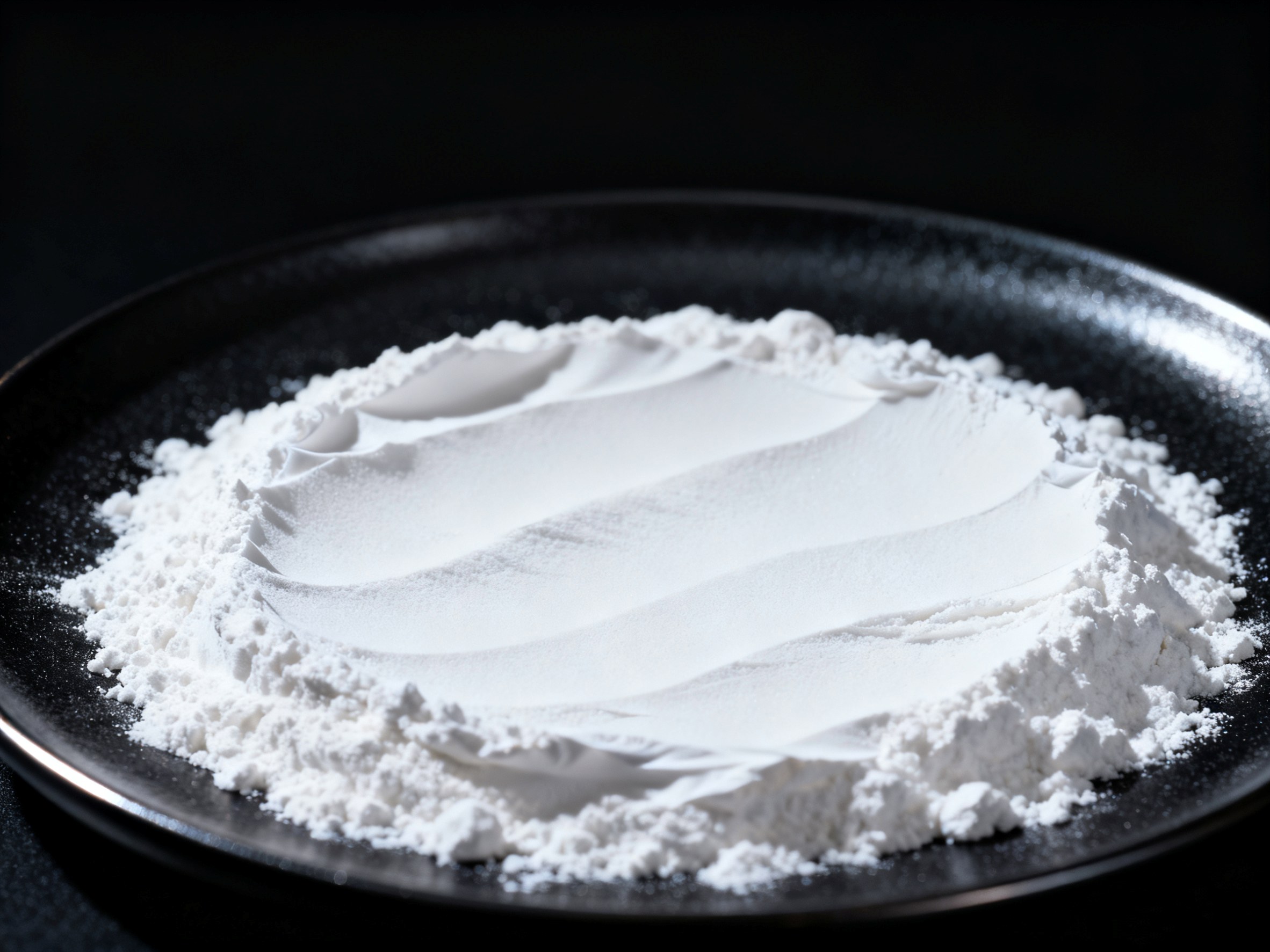
The way a powder dissolves on your tongue, the creamy texture of melted chocolate, or the consistent blend of spices in a seasoning packet all trace back to one overlooked detail: particle size. Even subtle shifts in how finely a solid is ground can change how ingredients behave during processing and how the final product feels to consumers. For instance, reducing cocoa solids to a finer powder not only eliminates grittiness but also intensifies color and flavor release, making each bite smoother and more indulgent without altering the recipe.
Beyond texture, particle size influences everything from flowability in large-scale mixing to the stability of emulsions. In dry soup mixes, a mismatch in particle dimensions can cause stratification, where larger flakes concentrate at the top while fine seasoning sinks to the bottom during transport. On the hydration side, poorly sized coffee grounds lead to uneven extraction—over-extracting the powder while under-extracting the larger bits. Getting the grind just right ensures that each portion performs consistently, whether it’s a bakery blend or a vitamin premix.
In applications where powder dispersion is key, like protein shakes or instant gravies, the size of the particles directly governs how quickly and evenly they wet out. Smaller particles may clump into stubborn lumps if not properly processed, while overly large ones stay gritty and refuse to suspend. Manufacturers walk a fine line, often engineering agglomerated particles that dissolve instantly yet still flow freely during packaging. It’s a balancing act that, when done well, feels effortless to the end user but can make or break a product’s market success.
How to Verify Product Purity and Compliance
Confirming that a product is genuinely pure and meets regulatory standards begins with a thorough review of its certification documents. Look for marks from recognized bodies—such as ISO, GMP, or organic certifications—as these indicate that independent auditors have verified manufacturing processes and ingredient sourcing. Don’t simply take a brand’s word at face value; cross-check the certificate numbers on the certifier’s official database whenever possible.
Another practical step is to request and analyze a recent certificate of analysis (COA) from a third-party lab. This report details the product’s composition, potency, and the absence of harmful contaminants like heavy metals or microbial impurities. Pay attention to the batch number and date to ensure the COA corresponds to the product in hand. If a company hesitates to provide this information, that’s a red flag worth heeding.
Beyond paperwork, consider the supply chain itself. Reliable suppliers often maintain transparent relationships with their manufacturers and can trace each ingredient back to its origin. Engaging directly with customer service to ask detailed questions about sourcing and quality-control protocols can reveal a lot about their commitment to compliance. In industries with frequent adulteration, periodic retesting through your own chosen lab adds an extra layer of assurance, safeguarding both your business and end users.
Top Performance Traits for Everyday Use
What separates great from good often hides in plain sight. Top performance isn't about heroic moments but about quiet consistency. It's the ability to stay focused when distractions scream, to choose deliberate practice over mindless repetition, and to adapt without losing momentum. Real-world high achievers don't chase perfection—they relentlessly refine the ordinary until it becomes extraordinary.
Curiosity fuels the drive that keeps top performers ahead. They ask sharper questions, not to impress but to understand deeper. This trait transforms routine tasks into learning labs, making every interaction a chance to tweak their mental models. Pair that with an unwavering ownership mindset, where blame is replaced by the question “What can I do differently?” and you get resilience that doesn't crumble under pressure.
The quietest yet loudest trait is energy management. Top performers guard their focus like a budget, investing it in high-leverage activities and fiercely protecting time for recovery. They read rooms, match their communication to the moment, and leave people slightly better than they found them—without fanfare. In a world obsessed with more, these understated strengths build not just careers, but a way of being that feels effortless to others, yet is intentional to the core.
Blending Tips to Avoid Common Pitfalls
One of the most frequent missteps in blending is rushing the process. When you pour ingredients too quickly or fail to scrape down the sides of your blender, you end up with uneven textures and hidden chunks. Take your time, especially with thicker mixtures like smoothie bowls or nut butters. Pause every 20 seconds to stir manually, then continue. This simple habit ensures everything incorporates smoothly, and you’ll never bite into a surprise clump of spinach again.
Another common error is ignoring the order of ingredients. Always add liquids first, followed by soft items like yogurt or fresh fruit, then harder ingredients such as frozen chunks or ice. This layering creates a vortex that pulls everything toward the blades more efficiently. Without it, your motor might strain, and you could burn out the blender long before its time. Think of it as stacking a deck in your favor—the right sequence leads to silky results with half the effort.
Finally, don’t overfill or overblend. It’s tempting to cram in just one more handful, but that can trap air and cause the motor to stall. Similarly, blending until the mixture becomes hot from friction often ruins delicate flavors and breaks down nutrients. Stop as soon as you reach the desired consistency. Remember, you can always pulse a few more times, but once you’ve gone too far, there’s no turning back. A light touch often yields the best texture.
Storing Your Silica for Long-Term Quality
Silica gel might seem sturdy, but its performance hinges on how you store it. Keep your desiccant sealed in an airtight container the moment it’s not actively drying something. Even a few hours in humid air can saturate those tiny pores, cutting its lifespan short. Think of it like an open bag of chips—once moisture sneaks in, the crunch is gone.
Temperature swings and direct sunlight are silent enemies. A cool, dark cupboard beats a garage shelf every time. If you’ve got indicating silica, watch for the color shift—it’s your cue to recharge or replace. Don’t rely on memory; grab a permanent marker and jot the date on the container so you know exactly how long it’s been sitting.
For bulk stock, split it into smaller, squeeze-the-air-out bags. That way, you only expose what you need. And if you’re reusing packets from packaging, inspect them first—cracks or clumping mean they’ve already done their job. A little care now keeps your gear rust-free and your pills dry months down the line.
FAQ
It’s an ultra-fine, high-purity powder produced by flame pyrolysis, designed specifically for ingestion or food contact. Unlike industrial grades, it meets strict FDA or EFSA standards for safety.
It acts as an anti-caking agent, thickener, and stabilizer without altering taste. You’ll often find it in powdered supplements, spices, and protein shakes to keep them free-flowing.
Not at all. Reputable manufacturers provide documentation like NSF, USP, or food additive approval numbers. Always check the datasheet to confirm it’s been tested for heavy metals and microbial limits.
Yes, but it’s essential to avoid inhaling the airborne dust. Wear a mask, pour gently, and use in a well-ventilated area. For cooking, tiny amounts go a long way—usually 0.5% to 2% by weight.
Products with a higher surface area, like those in the 200–400 m²/g range, disperse more easily in liquids. Popular choices include hydrophilic grades from long-standing suppliers known for low impurity levels.
Keep it in a tightly sealed container away from moisture and abrupt temperature swings. Clumping or texture changes might signal that the silica has absorbed humidity and should be replaced.
Absolutely. In the U.S., it falls under 21 CFR 172.480; in Europe, E551. Both set purity and usage levels. Always verify that the product label matches your region’s code before purchasing.
Conclusion
When selecting from the top food grade fumed silica products, understanding what elevates a material to food grade status is foundational. It’s not just about purity, but about a rigorous chain of compliance—from manufacturing under strict hygiene standards to meeting FDA or EFSA regulations. Particle size directly governs functionality: smaller, carefully controlled aggregates provide superior anti-caking and thickening without altering mouthfeel or clarity. Yet purity claims are hollow without verification; reputable products come with detailed certificates of analysis and are often third-party tested for heavy metals and microbial limits. For everyday use, the best silicas strike a balance between high surface area for efficient flow control and low dusting behavior, ensuring safer handling in busy production environments. Performance traits like consistent bulk density and rapid dispersion matter just as much as the initial spec sheet, because they dictate how reliably the powder integrates into spice blends, powdered beverages, or nutritional supplements.
Blending fumed silica into food systems requires avoiding common pitfalls—adding too much too quickly can create lumps that are impossible to reverse, while poor shear may leave undispersed pockets. The trick is to introduce the silica gradually under high-shear mixing, often after dispersing it in a dry ingredient first. Storage is equally crucial; these high-surface-area powders are hygroscopic, and exposure to humidity can compromise their free-flow properties and lead to caking before they even reach your mixing bowl. Keep sealed containers in a cool, dry area and minimize headspace to extend shelf life. Ultimately, the top ten products in this category share a common thread: they demonstrate not just compliance but practical dependability, supported by transparent documentation and real-world blending performance. Whether you're stabilizing a powdered fat or ensuring a salt shaker never clogs, choosing wisely among food grade fumed silicas means prioritizing verified purity, particle characteristics, and robust handling properties from day one.
Contact Us
Contact Person: Levin Wang
Email: [email protected]
Tel/WhatsApp: 8618668999988
Website: https://www.silicaplant.com/