Is Thermoplastic Expandable Microsphere suitable for water-based and solvent-based systems
2026-11-26
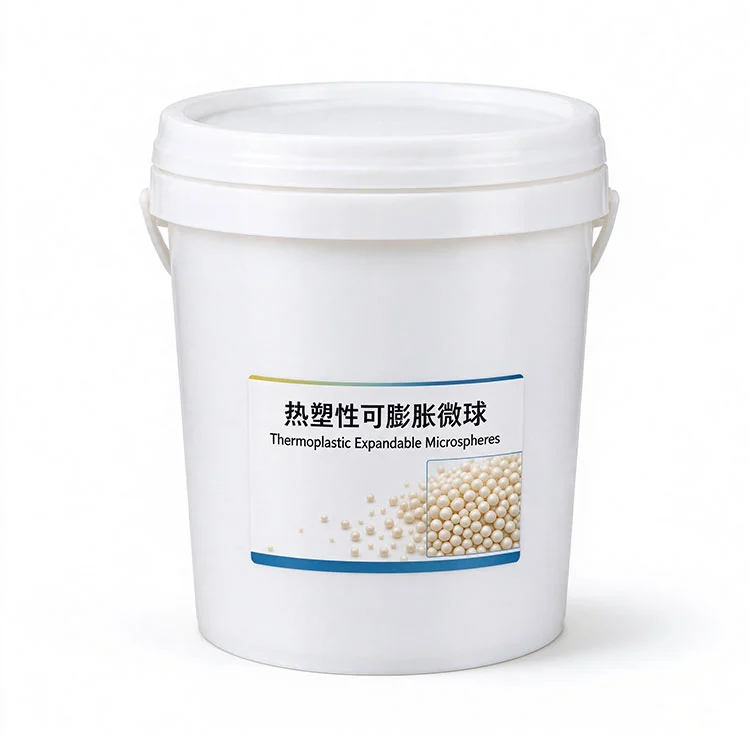
Thermoplastic Expandable Microsphere supplied by FARIDA is a lightweight physical foaming additive widely used in coatings, printing inks, artificial leather and putty. Its cross-linked thermoplastic shell traps a low-boiling hydrocarbon, which expands upon heating to reduce density and create a closed-cell structure. While it works well in many formulations, compatibility varies greatly between waterborne and solvent-borne systems, and solvent selection is critical to avoid premature shell damage and lost expansion performance.
Compatibility Reference Table
| System Type | Compatibility Level | Key Notes | Risk Solvents |
|---|---|---|---|
| Water-based | Excellent | Good dispersion, wet-grade microspheres available, stable storage | Strong alkaline at high temperature |
| Mild solvent-based | Conditionally suitable | Higher solvent-resistant grades required | Mineral oil, high-boiling esters |
| Strong polar solvent-based | Poor | Shell swelling, premature gas loss, failed expansion | MEK, acetone, DMF, low molecular weight ketones |
Formulation & Dispersion Checklist
- Choose wet slurry grades for water-based coatings to reduce dust and improve wetting
- Use low-shear mixing; high-speed agitation may rupture the microsphere shell
- Run small compatibility tests before batch production for all solvent formulations
- Keep processing temperature below the onset expansion temperature during mixing
- Avoid prolonged storage of microspheres mixed with aggressive solvents
- Select solvent-resistant shell grades for ink and solvent sealant applications
FAQ for Thermoplastic Expandable Microsphere
Q1: Why does Thermoplastic Expandable Microsphere usually perform better in water-based formulations? A1: The polymer shell is inherently stable in water and most aqueous dispersions. FARIDA provides water-dispersible wet microsphere grades that mix easily into latex paints, water-based inks and waterborne putty without shell swelling. There is no risk of the medium penetrating the shell and releasing the internal blowing agent during storage, so expansion ratio remains consistent when heated later.
Q2: Can I use standard Thermoplastic Expandable Microsphere in any solvent-based coating or ink? A2: Not all. Standard general-purpose grades are vulnerable to strong polar solvents such as ketones and low-molecular-weight esters. These solvents penetrate the thermoplastic shell, making it swell and leak the internal hydrocarbon, so the microspheres cannot expand fully when heated. For solvent-based systems, you must select the special solvent-resistant series. FARIDA offers high solvent-resistance grades designed for ester-based inks and oil-based coatings.
Q3: What signs show that Thermoplastic Expandable Microsphere is incompatible with a solvent system? A3: Common warning signs include reduced expansion ratio after storage, uneven foaming, sticky paste texture, and gas release during mixing instead of during heating. If these issues appear, stop large-scale production immediately. Switching to a compatible grade or adjusting the solvent blend is required. Even resistant grades need accelerated stability testing to confirm shelf life.
Additional Practical Notes
Water-based systems are the safest starting point for formulators new to this additive. Solvent-based projects need grade matching and lab pre-testing. Remember that these microspheres are physical foaming agents; their expansion function depends entirely on keeping the internal liquid sealed inside the shell before heating.
If you need solvent-resistant samples, dispersion guidance or bulk quotations for Thermoplastic Expandable Microsphere, share your medium type, mixing temperature and target expansion ratio with our formulation team. FARIDA supplies different grades for water-based coatings, solvent inks and polymer masterbatch lightweighting. Contact us today to get stable foaming additives matched to your formulation.