What Factors Influence the Efficiency of Reactive Dye Fixing Chemicals in Textile Processing
2026-11-06
Achieving consistent color fastness in dyed textiles depends heavily on how well Reactive Dye Fixing Chemical for Textile Processing performs under real production conditions. At Ewooan, we have seen that even premium fixing agents can underperform when key variables are overlooked. This article breaks down the factors that determine fixing efficiency and shows how to optimize each one.
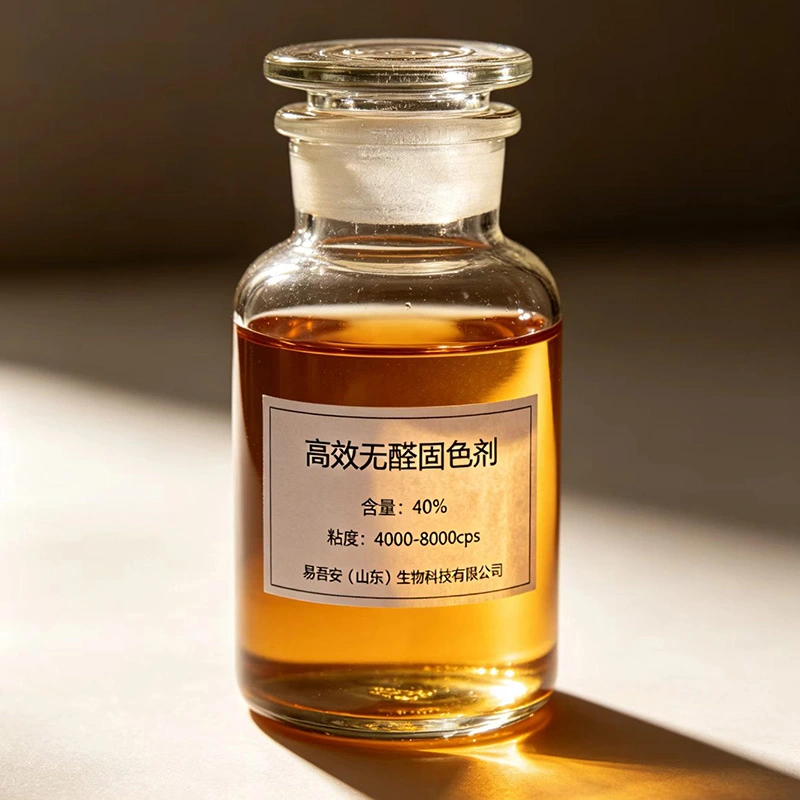
1. Chemical Structure and Compatibility
The ionic nature of the fixing agent must match the dye chemistry. Cationic fixing agents work well with anionic reactive dyes by forming insoluble complexes, but overdosing can cause shade change or harsh hand feel. Ewooan recommends always running a compatibility trial before bulk application.
2. pH Control
pH directly affects the fixation reaction. Most Reactive Dye Fixing Chemical for Textile Processing products perform best in a mildly acidic to neutral range (pH 5.5–7.0). Deviations can reduce bonding strength or precipitate the agent.
| Parameter | Optimal Range | Risk if Out of Range |
|---|---|---|
| pH | 5.5–7.0 | Poor fixation, precipitation |
| Temperature | 40–60°C | Uneven pickup, shade variation |
| Dosage | 1–3% owf | Over-fixing, hand feel loss |
| Contact time | 15–30 min | Incomplete penetration |
3. Dosage and Liquor Ratio
Excessive dosage wastes chemical and can yellow whites, while insufficient dosage leaves unreacted dye. Liquor ratio influences effective concentration, so dosage should be calculated on fabric weight, not bath volume alone.
4. Water Quality and Electrolyte Content
Hard water and residual electrolytes interfere with ionic bonding. Ewooan suggests checking water hardness and reducing salt carryover from the dyeing stage.
5. Fabric Preparation and Pretreatment
Poorly scoured fabric contains waxes and sizing agents that block dye sites. Consistent pretreatment is a prerequisite for uniform fixing.
6. Process Method
Pad-dry-cure, exhaustion, and cold pad-batch methods each demand different fixing formulations. Matching the Reactive Dye Fixing Chemical for Textile Processing to the application method is critical for repeatability.
Frequently Asked Questions
Q: What is the ideal pH for applying a Reactive Dye Fixing Chemical for Textile Processing?
A: Most fixing agents perform best at pH 5.5–7.0; always confirm with a lab trial because dye class and agent chemistry can shift the optimum.
Q: Can overdosing a Reactive Dye Fixing Chemical for Textile Processing cause shade change?
A: Yes, excess cationic agent can complex with dye on the fiber surface, causing dulling or yellowing, so dosage should follow owf calculations and pilot trials.
Q: How does water hardness affect Reactive Dye Fixing Chemical for Textile Processing efficiency?
A: High hardness consumes anionic sites and reduces bonding, so softening or sequestering the bath improves consistency and reduces chemical waste.
Conclusion
Fixing efficiency is a system property, not a single-product outcome. Control pH, dosage, water quality, pretreatment, and process method together, and select a supplier who understands these interactions. Ewooan provides technical guidance and tailored Reactive Dye Fixing Chemical for Textile Processing solutions for mills worldwide.
Contact us today to request samples, technical data sheets, or a process audit for your dyehouse.