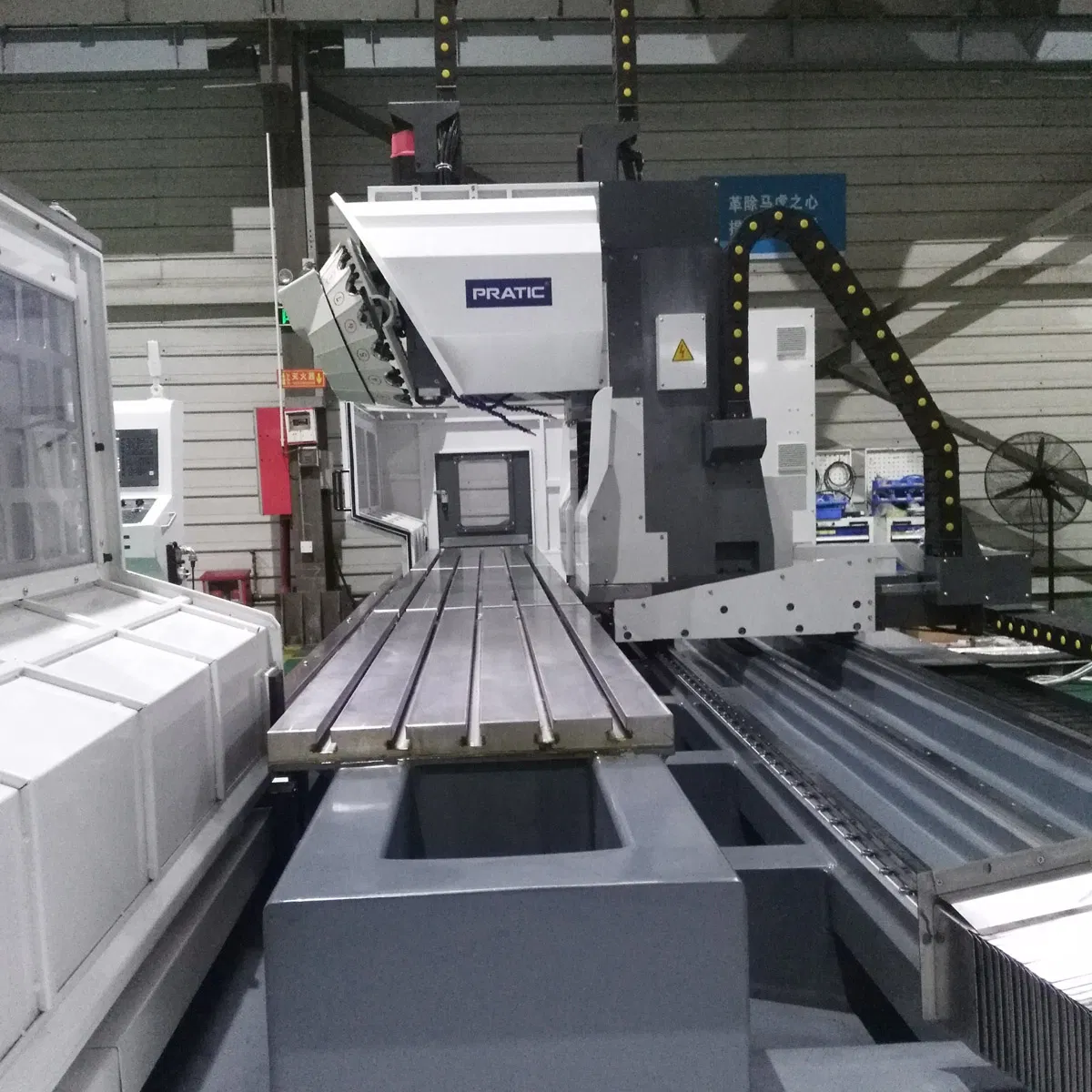
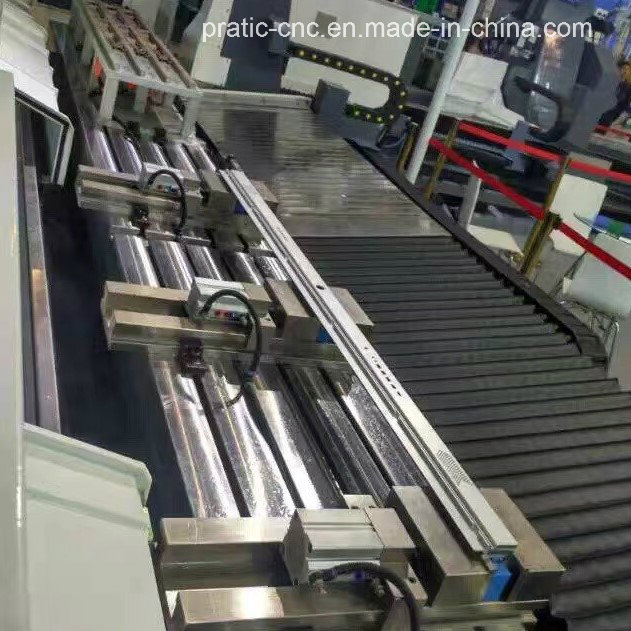
CNC Machine Tools
Understanding Modern Manufacturing: A Deep Dive into CNC Machine Tools
In the heart of modern manufacturing lies a critical technology: the CNC machine tool. Standing for Computer Numerical Control, CNC technology has revolutionized how we produce parts, from simple brackets to complex aerospace components. At processing-machinery.com, we specialize in providing industry-leading CNC solutions that blend precision, power, and reliability. This guide will explore the core parameters, capabilities, and applications of these transformative machines.
Core Components and How They Work
A CNC machine tool is an automated manufacturing platform that operates via programmed software commands. The process begins with a digital design (CAD model), which is converted into a set of numerical instructions (G-code). This code dictates every movement of the machine's tool, controlling factors like speed, position, and feed rate with exceptional accuracy. Key components include:
- Controller: The computer and software that interpret the G-code and send signals to the machine's motors.
- Drive System: Servo or stepper motors that precisely move the tool or workpiece along multiple axes.
- Machine Frame: The rigid structure (often cast iron or polymer composite) that provides stability and absorbs vibrations.
- Tooling: The cutting implements, such as end mills, drills, and lathe tools, which perform the material removal.
- Workholding: Devices like vises, chucks, and fixtures that securely hold the raw material in place.
Critical Technical Parameters for Selection
Choosing the right CNC machine requires a detailed understanding of its specifications. At processing-machinery.com, we ensure every parameter is clearly defined to match your production needs. Below are the essential parameters to consider.
| Parameter | Description | Typical Range / Examples | Importance |
|---|---|---|---|
| Number of Axes | The directions in which the cutting tool or workpiece can move. | 3-axis (X, Y, Z), 4-axis, 5-axis, Multi-turning. | Determines part complexity. 5-axis allows for near-complete machining in a single setup. |
| Travel / Work Envelope | The maximum dimensions of a part the machine can accommodate. | e.g., 1000mm x 500mm x 500mm (X, Y, Z travel). | Dictates the maximum part size you can produce. |
| Spindle Power & Speed | The motor that rotates the cutting tool. Power (kW) and maximum rotational speed (RPM). | 7.5 kW to 25+ kW; 8,000 to 30,000+ RPM. | Affects material removal rate, finish quality, and suitable material types (e.g., high RPM for aluminum). |
| Tool Changer Capacity | The number of tools the machine's automatic magazine can hold. | 12, 24, 40, 60, or more tools. | Enables complex, multi-operation jobs without manual tool changes, boosting efficiency. |
| Positioning Accuracy & Repeatability | How precisely the machine can move to a commanded position and return to it consistently. | Accuracy: ±0.005mm; Repeatability: ±0.002mm. | Critical for high-tolerance parts in industries like medical and aerospace. |
| Control System | The software and hardware interface (CNC controller). | Siemens SINUMERIK, Fanuc, Heidenhain, Haas. | Affects programming ease, advanced feature availability, and operator familiarity. |
| Rapid Traverse Rate | The speed at which the machine moves between cuts (non-cutting movement). | 30 m/min to 60+ m/min. | Higher rates reduce non-productive time, increasing overall throughput. |
Types of CNC Machine Tools We Offer
- CNC Milling Machines (Machining Centers): Utilize rotating cutting tools to remove material from a stationary workpiece. Available as Vertical Machining Centers (VMCs) and Horizontal Machining Centers (HMCs). Ideal for complex 3D shapes, pockets, and slots.
- CNC Lathes (Turning Centers): Rotate the workpiece against a stationary cutting tool to create cylindrical parts. Capabilities include facing, turning, boring, and threading. Advanced models are mill-turn centers, combining milling and turning.
- 5-Axis CNC Machines: The pinnacle of flexibility. The tool can move in five directions simultaneously, allowing machining of highly complex geometries (e.g., impellers, turbine blades) in one setup.
- CNC Routers: Typically used for softer materials like wood, plastics, and non-ferrous metals. Excellent for large-format work like sign-making, prototyping, and cabinetry.
- CNC Grinders: Used for achieving ultra-fine surface finishes and extremely tight tolerances on hardened materials using an abrasive wheel.
Frequently Asked Questions (FAQ) About CNC Machine Tools
Q: What are the main advantages of using CNC machining over manual machining?
A: CNC machining offers unparalleled consistency, precision, and repeatability. Once a program is verified, it can produce identical parts indefinitely. It dramatically increases production speed, reduces waste through optimized tool paths, and enhances operator safety by minimizing direct contact with cutting tools. Complex geometries that are impossible or impractical to make manually are routine for CNC.
Q: What materials can be processed with CNC machines from processing-machinery.com?
A: Our machines are engineered to handle a vast array of materials. This includes all metals (aluminum, steel, stainless steel, brass, titanium, alloys), engineering plastics (ABS, Nylon, Delrin, PEEK), wood, composites, and even certain ceramics. The specific capabilities depend on the machine's spindle power, rigidity, and tooling.
Q: How do I choose between a 3-axis, 4-axis, and 5-axis machine?
A: The choice depends on your part geometry and production goals. A 3-axis machine is perfect for prismatic parts and 2.5D contours. A 4-axis adds a rotary axis, allowing machining around a cylinder (e.g., camshafts). A 5-axis machine is essential for complex, organic shapes and allows complete machining in a single setup, which reduces errors and handling time. processing-machinery.com can help you analyze your parts to determine the most cost-effective axis configuration.
Q: What is the importance of the CNC control system, and which one is best?
A: The control system is the machine's "brain." It translates CAD/CAM code into precise motor movements. Key factors are user interface, programming flexibility, processing speed, and reliability. There is no single "best" system; it depends on your shop's needs. Fanuc is renowned for robustness, Siemens for advanced functionality in complex machining, and Haas for user-friendliness. We provide training and support for all major controllers we supply.
Q: What does "repeatability" mean, and why is it often a more critical parameter than absolute accuracy?
A: Accuracy refers to how close the machine gets to the commanded position. Repeatability is its ability to return to that exact same position consistently. In high-volume production, exceptional repeatability ensures every single part is within tolerance, even if there is a minor, consistent deviation from the absolute coordinate (which can often be compensated for in programming). It is a key indicator of a machine's long-term stability and quality.
Q: Can CNC machines be used for both prototyping and high-volume production?
A: Absolutely. CNC is incredibly versatile. For prototyping, it allows for rapid iteration and testing of designs directly from digital files without expensive molds. For production, once the program and setup are finalized, CNC machines can run 24/7 with minimal supervision, making them highly efficient for volumes ranging from dozens to tens of thousands of parts. Our solutions at processing-machinery.com are scalable for both environments.
Q: What kind of maintenance do CNC machines require?
A: Regular preventative maintenance is crucial for longevity and precision. This includes daily cleaning of chips and coolant, weekly checks of lubrication levels and way covers, and monthly inspections of belt tensions and ball screw condition. Annual professional servicing by certified technicians is recommended to calibrate axes, check spindle alignment, and update software. We offer comprehensive service contracts to ensure your machinery from processing-machinery.com operates at peak performance.
Applications Across Industries
The precision and versatility of CNC machine tools make them indispensable across sectors. In aerospace, they mill intricate components from titanium and aluminum alloys. Automotive manufacturers use them for engine blocks, transmission parts, and custom accessories. The medical industry relies on them for producing sterile, high-tolerance surgical instruments and orthopedic implants. Beyond these, they are fundamental in mold & die making, energy sector part manufacturing, electronics, and consumer product development. The team at processing-machinery.com has expertise in tailoring CNC solutions for each of these demanding fields.
Investing in a CNC machine tool is a significant decision that impacts your manufacturing capability, quality, and bottom line. By understanding the parameters, types, and applications detailed above, you are better equipped to specify the right equipment. For over two decades, processing-machinery.com has partnered with manufacturers to provide not just machines, but complete productivity solutions, backed by deep technical support and industry knowledge.
- View as